
What to Wear After Surfing: The Complete Poncho Guide
Why changing ponchos work, how to choose fabric and fit, and the simple routine that makes cold post-surf minutes easier.
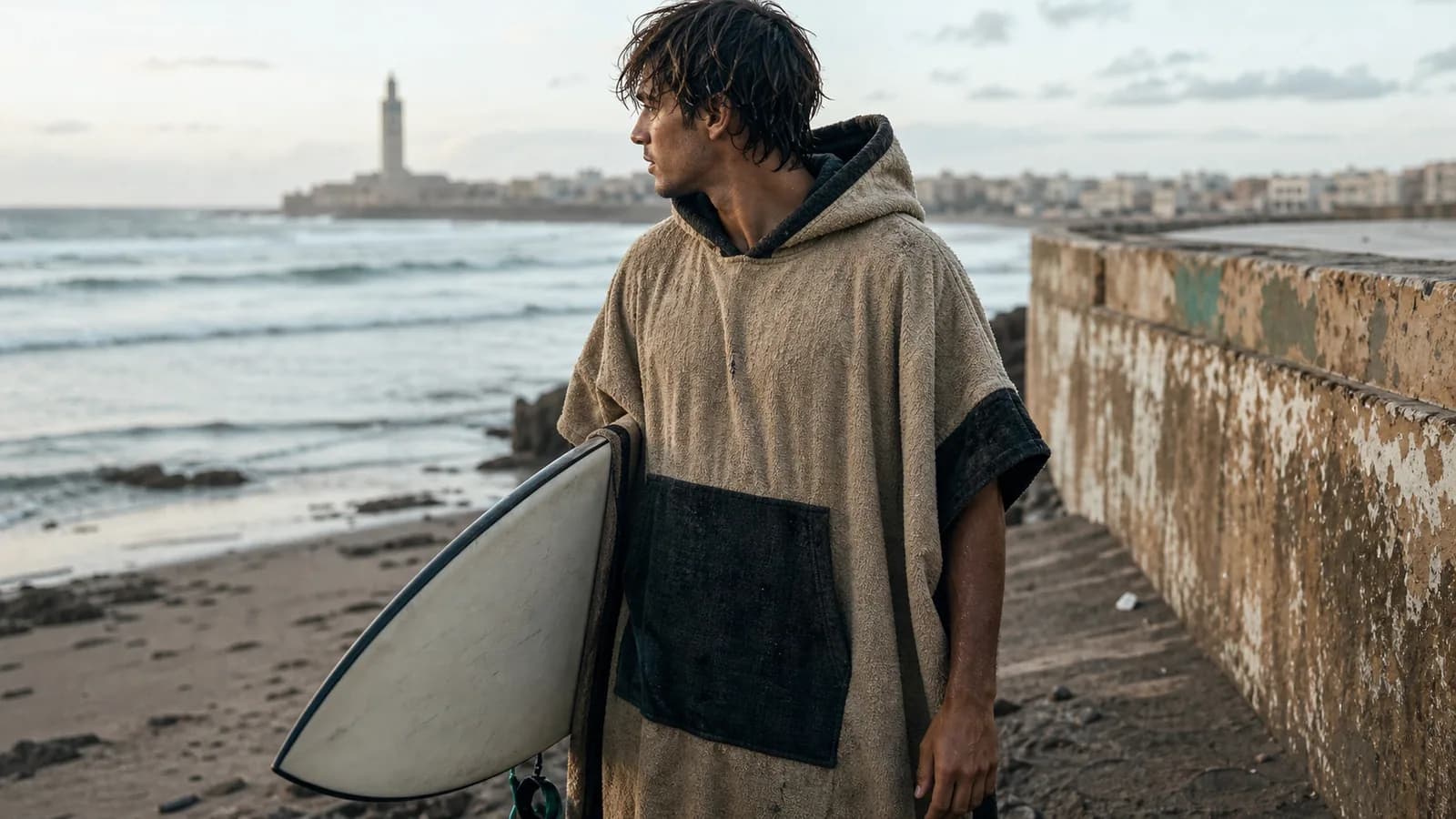
The minutes after surfing are often less graceful than the session itself. You are wet, the wind feels colder than it did from the water, the car is full of gear, and there may be nowhere private to change. A surf poncho solves several small problems at once: it gives coverage, absorbs water, blocks some wind, and lets you use both hands while changing. It is not essential in the way a leash or safe board is essential, but once it fits your routine, it can become the piece you reach for after almost every session.
What is a surf changing poncho?
A surf poncho is an oversized wearable towel, usually with a hood and wide arm openings. The generous body creates enough room to remove a wetsuit or swimwear underneath while staying covered. Unlike a normal towel, it rests on your shoulders, so you do not need to hold it closed with one hand while trying to change with the other.
The best designs feel simple. They are wide enough for movement, long enough for privacy, and not so heavy that they become a burden when wet. A hood helps dry hair and reduces heat loss around the head. A large front pocket can warm hands or hold wax and keys for a moment, although valuables should still be secured. Some ponchos prioritize thick warmth; others use lighter quick-dry fabric for travel and hot weather.
- Coverage for changing in public beach areas without exposing yourself.
- Absorbent fabric for drying skin and hair after salt water.
- A wearable layer that leaves both hands free for wetsuit changes.
- A little protection from wind while you organize your board and gear.
Why a poncho feels warmer than a towel
Coverage reduces the cold gap between water and dry clothes
Water pulls heat from the body quickly, and evaporation increases that cooling effect when wind crosses wet skin. A towel helps only where it stays in contact. A poncho covers the shoulders, torso, and often the upper legs continuously, reducing exposed wet area while you change. It is not a technical insulated jacket, but the coverage can make the transition from wetsuit to dry clothes much more comfortable.
The difference is especially noticeable on the Atlantic coast when a mild-looking day carries strong wind. After a long session, fatigue can also make simple movements slower. Having one layer that stays in place means less time standing wet while searching through a bag. The useful sequence is straightforward: put the poncho on immediately, remove the wetsuit underneath, dry fully, then change into warm dry layers before packing the rest of the equipment.
Cotton, microfiber, and blended fabrics
Choose for your climate and routine
Cotton terry feels familiar because it behaves like a high-quality towel. It absorbs water well, feels comfortable against skin, and can provide satisfying weight in cool conditions. The tradeoff is drying time and bulk. A thick cotton poncho can stay damp for hours if it is left folded in a bag, and repeated storage while wet encourages odor.
Microfiber is lighter, packs smaller, and often dries faster. That makes it useful for travel, warm climates, or surfers carrying gear on foot. Some people dislike its smoother hand feel or find that it does not feel as warm as dense cotton. Blended fabrics aim for balance. Whatever the material, look at fabric weight, stitching, hood construction, and care instructions rather than assuming one fiber is automatically premium. The best fabric is the one you will wash, dry, carry, and use consistently.
Fit matters more than a normal clothing size
A changing poncho should not fit like a sweatshirt. You need space to pull your arms inside, bend, and work a wetsuit over your hips and ankles. Narrow shoulders or tight armholes defeat the point. At the same time, an extremely long or wide poncho can drag on wet ground, catch wind, and feel awkward when walking.
Check the garment length against your height and think about where you normally change. Someone using a sheltered parking area may prefer a heavier, longer cut. Someone walking over rocks or traveling by bus may want a more compact shape. The hood should sit comfortably without pulling the neckline backward. If the poncho has side openings, make sure they provide movement without reducing coverage. Product measurements are more useful than labels such as one size or oversized.
- Enough width to bring both arms inside the poncho.
- Length that covers you while standing and bending.
- Arm openings that allow movement without exposing too much.
- A hood deep enough for wet hair but not heavy enough to pull.
How to use a changing poncho after surfing
Build a short, repeatable post-session routine
Prepare before you enter the water. Put dry clothes, the poncho, and a small mat or waterproof bag where you can reach them without emptying everything onto the ground. After the session, rinse sand from your feet if possible, put the poncho on, and remove the wetsuit slowly. Standing on a mat protects the wetsuit from sharp gravel and keeps sand out of the lining.
Dry your torso and hair first, then put on the layer closest to your skin. Continue with trousers, socks, and a windproof outer layer if the weather requires it. Do not use the poncho as an excuse to stay in wet clothing for a long conversation. Warmth comes from becoming dry. When you are finished, shake out sand and hang the poncho fully open as soon as you get home. A damp bundle in the car is where even good fabric begins to smell tired.
Care, drying, and keeping the fabric fresh
Never store it wet and folded
Salt, sand, sunscreen, and damp storage all affect fabric. Follow the care label and avoid using more detergent than needed, because residue can reduce absorbency. Fabric softener can coat towel fibers, so many terry products perform better without it. Wash colors with similar tones, especially during the first cycles, and repair loose stitching before a small problem spreads.
Airflow is the priority after every use. Hang the poncho from a wide point rather than leaving it over a narrow hook where thick layers stay folded together. In humid weather, turn it once while drying. Make sure the hood and pocket are open. If you use the poncho several times a week, a second lightweight option can help while the main one dries. Good care is not glamorous, but it is what keeps a post-surf layer comfortable for more than one season.
Where Fishing Waves ponchos fit
A useful layer for more than one kind of coast day
Fishing Waves approaches the surf poncho as coastal equipment that also belongs in everyday Atlantic life. It should work after a session, beside a fishing spot, during an early beach morning, or on the road between the city and the water. That means the fabric, shape, and visual identity need to feel useful rather than costume-like. Limited releases also allow details to stay considered instead of being flattened into a generic beach product.
A poncho will not improve your surfing, but it can improve the edges of the day: changing with less stress, recovering warmth sooner, and keeping the car seat dry. Browse the latest Fishing Waves drop when you are ready, or continue with our comparison of ponchos and towels if you are deciding which one belongs in your own kit. Choose the piece that supports the way you actually reach the coast.
Common questions
Can you change clothes under a surf poncho?
Yes. A changing poncho is cut wide and long so you can move your arms inside and change while staying covered. Check measurements because very narrow or short designs reduce privacy.
Is cotton or microfiber better for a surf poncho?
Cotton is usually warmer and more towel-like, while microfiber is lighter and faster to dry. Your climate, transport, storage, and preferred feel should decide.
How do you stop a surf poncho from smelling?
Shake out sand, rinse or wash as needed, and hang it fully open immediately after use. Never leave a wet poncho folded in a board bag or car.
Shop the latest coastal drop.
Limited products shaped by Atlantic sessions, shore days, and Casablanca movement.
Shop Fishing WavesJoin the Fishing Waves community.
Eligible owners connect through product passes, member access, community stories, and future coastal projects.
Discover Wave ClubRelated stories
All articles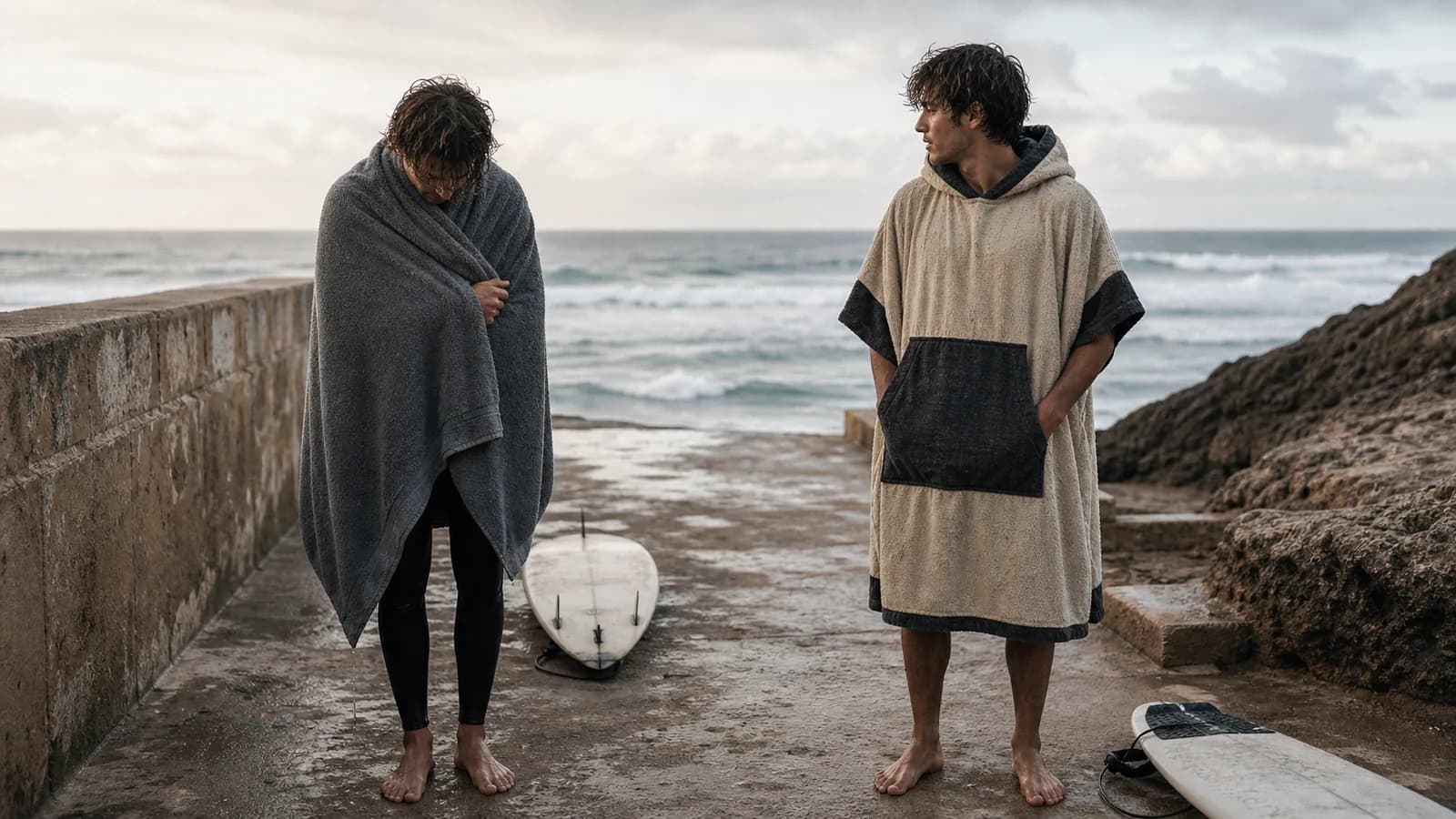
Surf Poncho vs Towel: Which One Is Better After a Session?
An honest comparison of privacy, warmth, absorbency, packability, drying time, travel, and value after surfing.
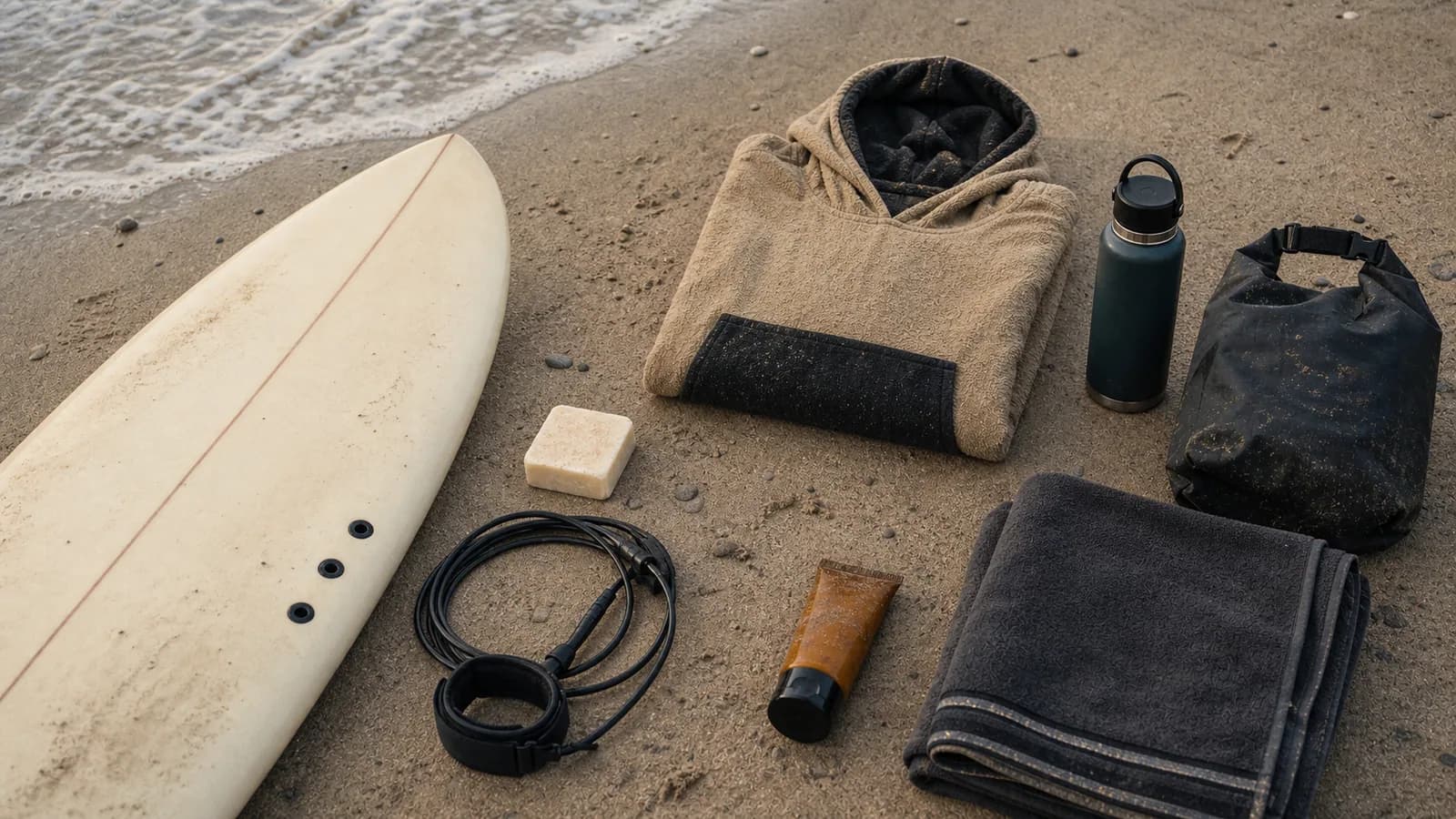
Beginner Surf Gear Checklist Before Your First Session
The essential equipment, comfort items, and behavior checks that make a first surf session safer and less stressful.
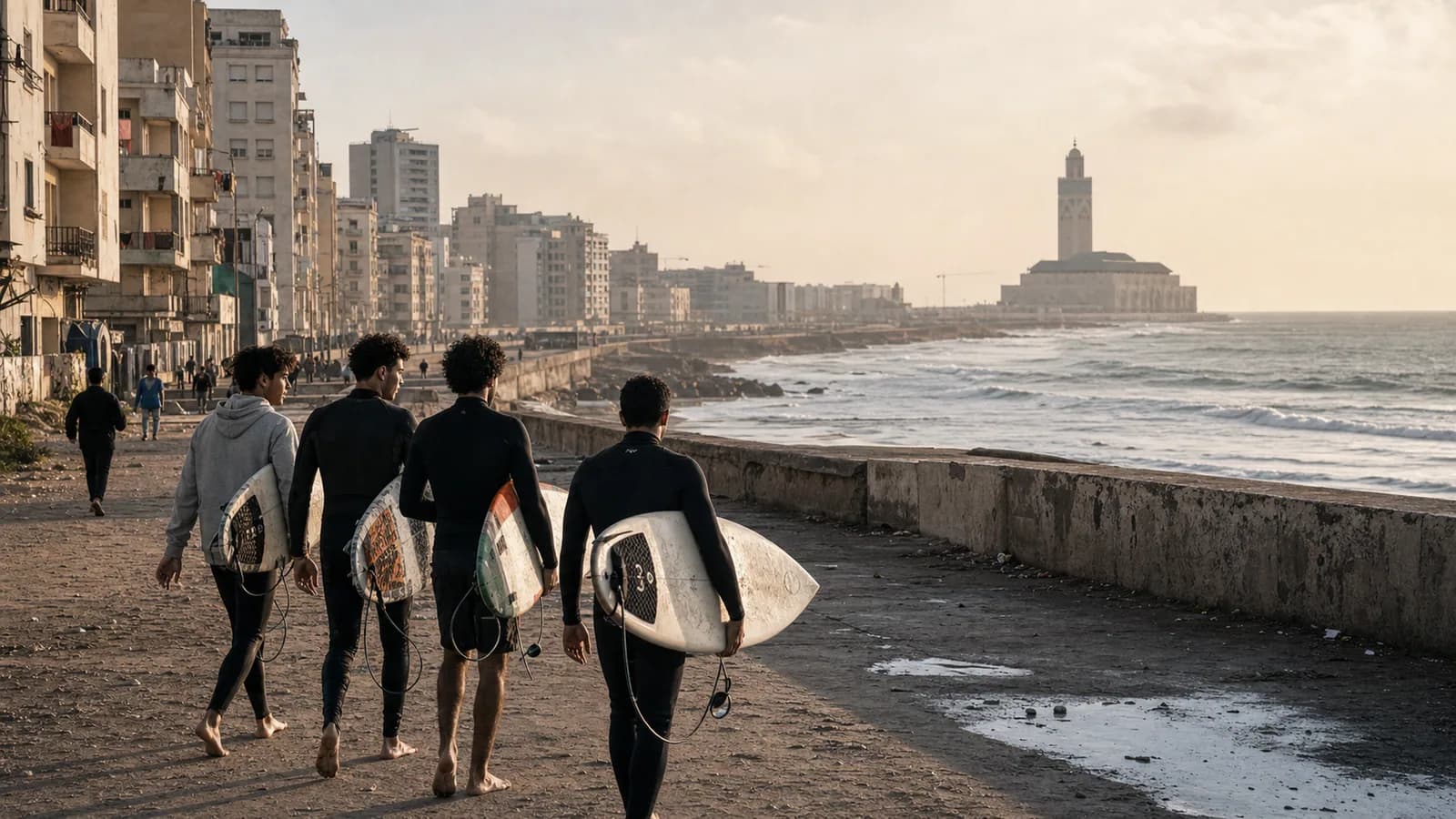
Casablanca Surf Culture: From City Life to Ocean Sessions
A local look at the movement between dense city days, Ain Diab sessions, fishing traditions, and Casablanca's Atlantic identity.