
Beginner Surf Gear Checklist Before Your First Session
The essential equipment, comfort items, and behavior checks that make a first surf session safer and less stressful.
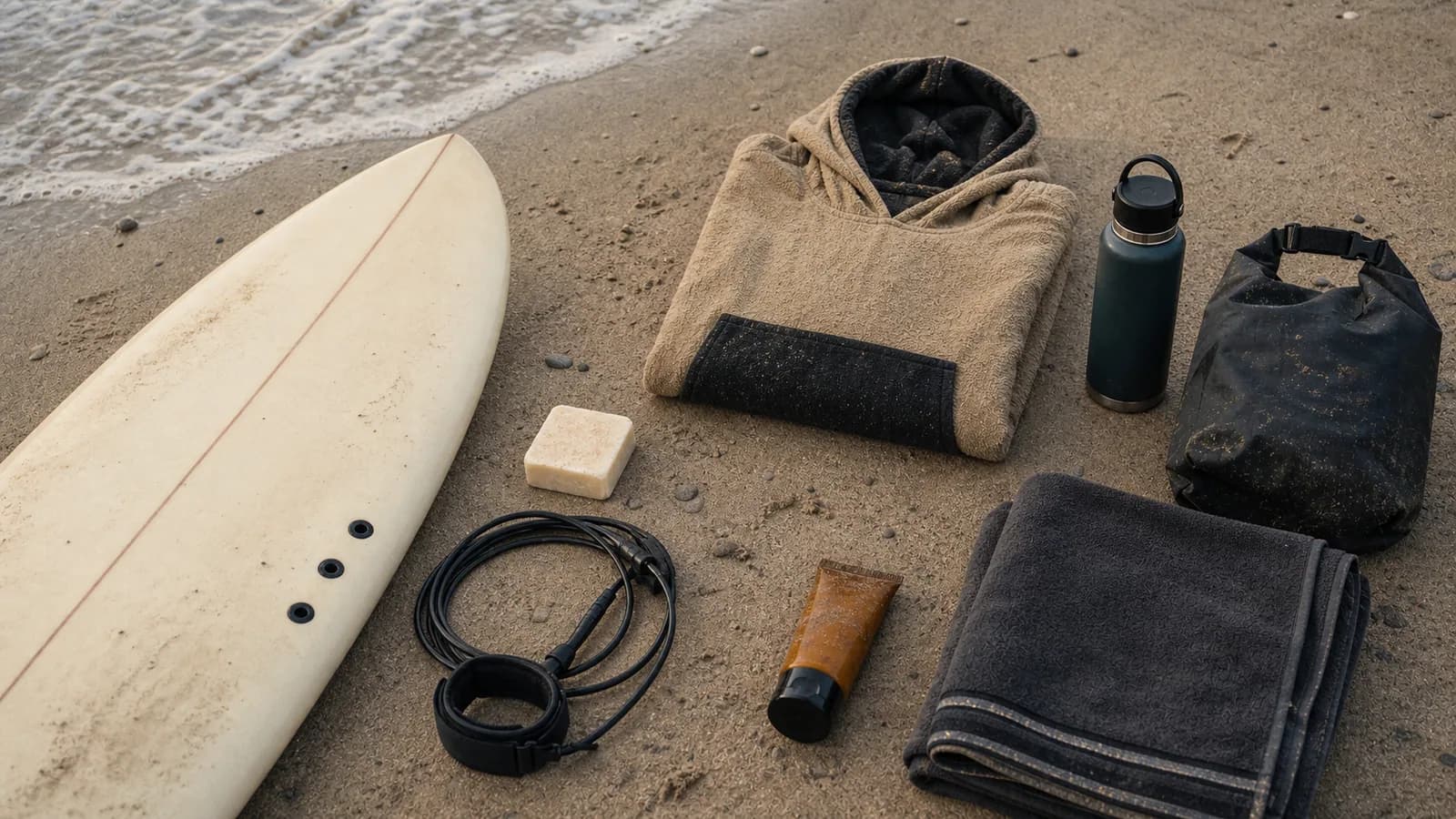
Your first surf session does not require a van full of equipment. It requires a short list of reliable items, a safe learning environment, and enough preparation that you can focus on instruction instead of searching for missing gear. Most surf schools provide a board and wetsuit, so ask what is included before buying anything. The checklist below separates true session essentials from useful comfort items and explains why each one matters. Equipment supports the day, but judgment, local guidance, and respect remain the most important parts of the kit.
1. A beginner-friendly surfboard
For most first sessions, a large soft-top board is the right tool. Extra length, width, and volume make paddling and balance easier, while the soft deck reduces impact compared with a hard board. The correct size depends on your body, fitness, and conditions, so use the board selected by a qualified instructor rather than copying a friend's choice.
Do not rush to buy a small performance board because it looks easier to carry. Low-volume boards demand better paddling, positioning, and timing, which can turn a useful lesson into repeated frustration. Rental equipment is sensible while you learn what shape suits you. Check the board for damaged fins, exposed sharp areas, loose hardware, or waterlogged sections before entering.
- Start with a stable soft-top selected for your size and lesson conditions.
- Confirm that the fins are secure and not cracked.
- Carry the board under control, especially in wind and crowded areas.
- Never place the board between yourself and an incoming wave.
2. A leash in good condition
Inspect the leash before every session
The leash keeps the board connected to you after a fall, but it is not a rescue rope and does not replace swimming ability. It should match the board length and be attached securely at both the ankle cuff and leash plug. Inspect the cord for cuts, flattened sections, brittle material, and damaged swivels. A failed leash can leave you separated from the board and send the board toward someone else.
Wear the cuff around the ankle recommended for your stance, with the rail saver correctly attached to the board. Do not wrap the leash around your hand or fingers. Learn how it can catch on rocks, feet, or objects, and avoid relying on it in conditions where entanglement is a major risk. In supervised beginner whitewater, your instructor should explain how to fall away from the board and protect your head when resurfacing.
3. Wax or the correct deck surface
Grip should be deliberate, not messy
Many soft-top school boards already provide grip, while some still benefit from wax approved for that surface. Hard boards generally need surf wax matched to water temperature. Too little grip makes your hands and feet slide; excessive dirty wax can become uneven and collect sand. Ask the rental shop or instructor before adding anything to their equipment.
If you own the board, keep a small bar in your bag and apply it before reaching the water, not while standing in everyone's path at the entry. Avoid leaving wax in direct sun or a hot car where it can melt across clothing. Pick up wrappers and broken pieces. Small packaging is exactly the kind of beach litter that disappears into sand until someone else has to remove it.
4. The right wetsuit or swim layer
Water temperature, air temperature, wind, session length, and personal cold tolerance all affect what you should wear. A wetsuit that is too thin can leave you cold and slow; one that is too thick or tight can restrict paddling. Fit should be close enough to limit water flushing without crushing the neck, shoulders, or breathing. Rental staff can help with thickness and size.
In warmer conditions, a swimsuit or rash guard may be enough, but sun and board friction still matter. Use clothing designed to stay secure in moving water. Avoid loose cotton, jewelry, and anything that can snag. If you are unsure about local temperature, choose comfort over appearance. Cold surfers make rushed decisions, lose coordination, and often stay in because they do not want to admit the session has stopped being productive.
- Ask a local school for the day's recommended wetsuit thickness.
- Check that the neck, zip, and seams are comfortable before entering.
- Use a rash guard when friction or sun exposure is likely.
- Bring fully dry clothes for after the session.
5. A towel or changing poncho
Plan the change before you get cold
You need a way to dry off and change without exposing yourself or filling the car with seawater. A towel is compact and familiar. A changing poncho stays on your shoulders, provides coverage, and leaves your hands free while removing a wetsuit. For windy Atlantic sessions, that continuous coverage can make the post-surf routine much easier.
Whichever you choose, keep it dry before the session and hang it open afterward. A small changing mat or waterproof bag is useful for standing on while removing the wetsuit. It protects the neoprene from gravel and keeps some sand out of the lining. Do not change in doorways, access paths, or places where local residents and workers need to move.
6. Sunscreen, water, and simple recovery
Sun and hydration are part of surf safety
Cloud, wind, and cool water can hide how much sun you receive. Use broad-spectrum, water-resistant sunscreen and apply it early enough to settle before entering. Cover commonly missed areas such as ears, neck, backs of hands, and lower legs. A hat and light long-sleeve layer help before and after the session. Choose products responsibly and avoid leaving containers in direct heat.
Bring more drinking water than you expect to use. Surfing combines paddling, repeated standing attempts, cold exposure, and sun, so beginners often finish more tired than anticipated. A simple snack can help after a longer lesson. Avoid entering dehydrated or immediately after a heavy meal. If you feel dizzy, unusually cold, confused, or exhausted, tell the instructor and stop.
7. A practical bag and a secure key plan
Dry, wet, valuable, and waste should have separate places
Use a bag that separates wet gear from dry clothing. A flexible waterproof tub or changing bag is useful because you can stand inside it, then carry the wetsuit home without soaking everything else. Keep a small waste bag for wrappers and anything collected from the beach. Label your equipment discreetly if you are using a busy school or camp.
Decide where keys and phone will stay before you enter. Do not hide keys on a tire or under an obvious rock. Use the secure system provided by the surf school, a proper lockbox designed for the situation, or leave valuables with a trusted person. Waterproof phone pouches can fail and may create a hard object against the body. The simplest first session is usually the one with the fewest valuables.
8. The etiquette checklist no shop can sell you
Preparation includes behavior
Know the boundaries of the lesson zone. Keep control of the board, do not throw it toward incoming waves, and leave space around other learners. If you progress beyond whitewater, learn priority before approaching a lineup. The surfer closest to the breaking part of the wave usually has priority, but local conditions and instruction determine where beginners should sit. Never assume people can avoid you.
Watch the water before entering, follow local advice, and stay within the area your instructor has chosen. Say hello, avoid blocking access, and carry every item back out. Explore Fishing Waves gear when you know what your routine needs, but begin by renting and learning. The smartest first kit is not the most expensive one. It is the one that lets you move safely, stay comfortable, and pay attention.
Common questions
Do I need to buy surf gear before my first lesson?
Usually not. Most reputable schools provide a suitable soft-top board and wetsuit. Ask what is included, then bring sun protection, water, dry clothes, and a towel or poncho.
What surfboard is best for a beginner?
A stable, high-volume soft-top selected for your body and conditions is usually best. An instructor or trusted rental shop should choose the size.
Is a surf poncho essential?
No, but it is useful for privacy, warmth, and hands-free changing. A normal towel still works if it suits your transport, climate, and budget.
Shop the latest coastal drop.
Limited products shaped by Atlantic sessions, shore days, and Casablanca movement.
Shop Fishing WavesJoin the Fishing Waves community.
Eligible owners connect through product passes, member access, community stories, and future coastal projects.
Discover Wave ClubRelated stories
All articles
How to Read Waves Before Surfing
A shore-based method for seeing sets, peaks, whitewater, currents, wind, tide, and the safest way into and out of the water.

What to Wear After Surfing: The Complete Poncho Guide
Why changing ponchos work, how to choose fabric and fit, and the simple routine that makes cold post-surf minutes easier.

Best Surf Spots in Morocco for Beginners
A practical first-trip guide to gentle waves, good timing, local surf schools, and respectful sessions along Morocco's Atlantic coast.