
How to Read Waves Before Surfing
A shore-based method for seeing sets, peaks, whitewater, currents, wind, tide, and the safest way into and out of the water.
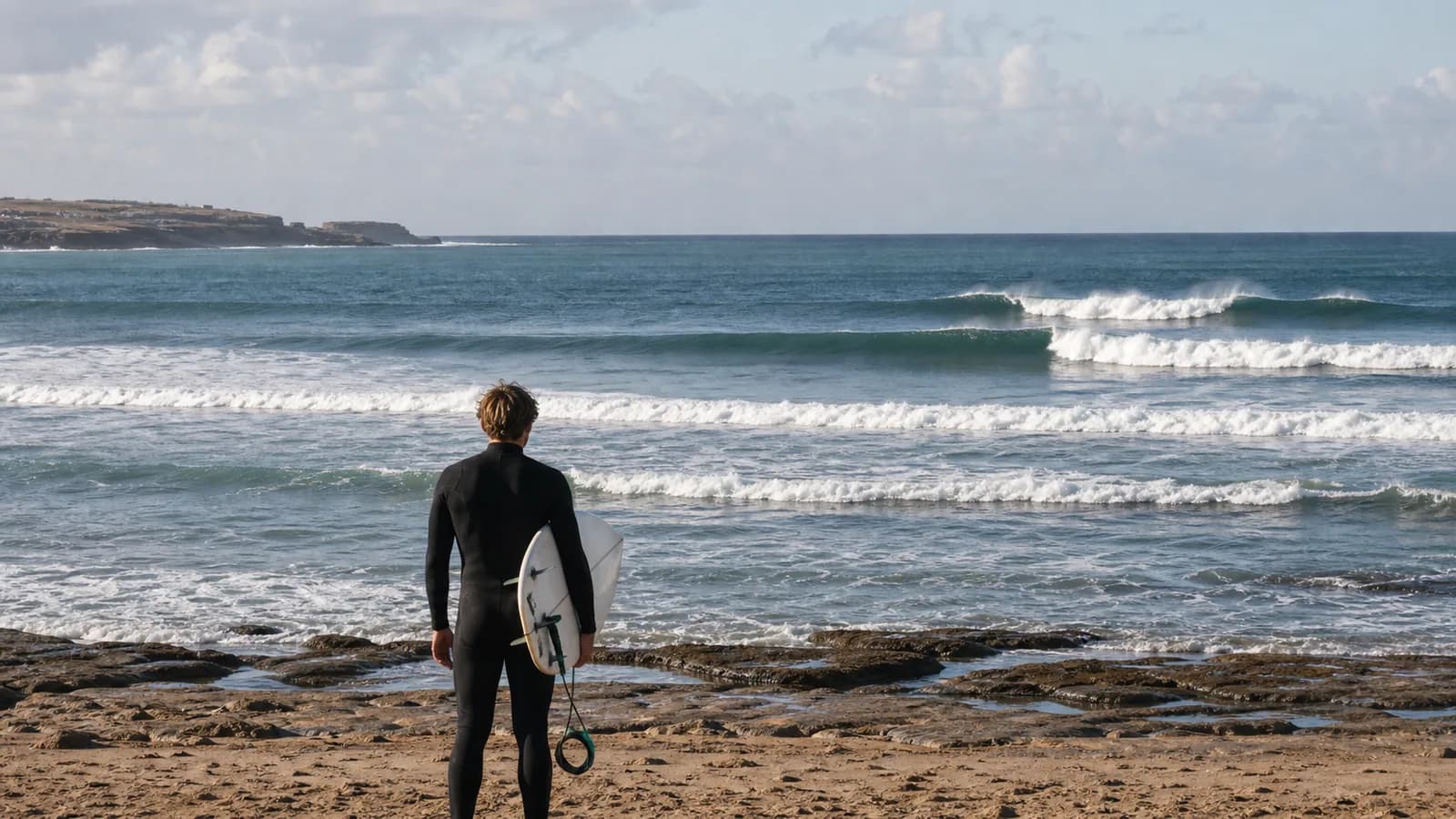
Wave reading begins before you touch the water. From the beach, you can see where sets rise, how they break, where whitewater travels, how current moves surfers, and what wind does to the surface. This habit helps you choose a safer entry, save energy, improve positioning, and recognize when the session is beyond your ability.
Start with ten quiet minutes
Beginners often arrive excited, zip the wetsuit, and walk directly into the first visible gap. Reverse that order. Stand somewhere with a broad view and watch for at least ten minutes, longer when the swell is inconsistent. You are trying to see a complete cycle: smaller waves, a pause, a larger set, and the water movement that follows. Count the number of waves in several sets and the approximate time between them. The pattern will not be exact, but it gives you a working picture.
Notice other surfers without copying them blindly. Experienced surfers may use a rocky entry or sit at a peak that is not suitable for you. Watch where beginners and instructors operate, where people drift, and where they return to shore. Compare the largest set you see with the average waves. Make your decision based on the larger reality, not the calmest thirty seconds.
- Watch more than one full set before choosing an entry.
- Identify where people drift after five or ten minutes.
- Look for rocks, shorebreak, rip currents, and closed exits.
- Ask a local instructor when the pattern is unclear.
Understand sets and lulls
A lull is part of the pattern, not proof that the ocean is calm
Ocean swell often arrives in groups called sets, followed by quieter periods or lulls. A lull can make a paddle-out look easy, but the next set may be larger and arrive before you reach a safe position. Watch the horizon for darker raised lines and compare how quickly they organize. Longer-period swell can carry more energy and create waves that are larger than they first appear from shore.
Set awareness also helps with timing. Surfers may use a lull to paddle through the impact zone, while someone returning to shore may wait until the largest waves pass. Beginners should not treat timing as a trick for entering conditions that are too strong. If the paddle-out only seems possible during a perfect gap, or if every set would overwhelm your ability to control the board, choose a gentler area.
Find the peak and the breaking direction
Read repeated behavior, not one attractive wave
The peak is the area where a wave begins to break. From there, the breaking section may travel left, right, or in both directions. A clean shoulder is the unbroken face moving away from the peak. Closeouts break across most of their width at once, offering little open face and often creating heavy whitewater. Beginners practicing in foam may use a controlled whitewater zone, while surfers riding unbroken waves need to position near a manageable peak.
Watch several waves at the same location. One wave can be misleading because swell angle and size vary. Look for the most repeatable behavior. If every wave breaks differently, the bottom may be shifting sand or the swell may be mixed. That does not automatically make the spot unsafe, but it increases the need for local guidance and conservative positioning.
Whitewater shows energy and direction
Whitewater is not visual noise. It shows where waves have already released energy and how that energy moves toward shore. Follow a band of foam. Does it travel straight in, sweep sideways, stop over deeper water, or accelerate through a narrow section? Sideways movement can reveal current. A persistent area with fewer breaking waves may be a deeper channel, but it could also be a rip carrying water away from shore.
Beginners sometimes assume calm-looking dark water is the safest place. In reality, that gap may be where water is flowing seaward. Signs of a rip can include choppy texture, foam moving offshore, a break in the line of waves, or differently colored water. These signs vary by beach and can be difficult to identify. Swim and surf near supervision, and never use an apparent channel without understanding where it leads.
- Track foam to see whether water moves sideways or offshore.
- Do not assume a gap in breaking waves is a safe swimming zone.
- Notice where surfers enter, but confirm that their route matches your ability.
- If caught in a current, stay calm, signal for help, and follow trained local guidance.
Wind changes wave quality and effort
Clean does not always mean easy
Offshore wind blows from land toward sea and can hold wave faces open, sometimes creating cleaner shape. Strong offshore wind can also make paddling, takeoffs, and board control harder, especially for beginners. Onshore wind blows from sea toward land and often creates bumpier, less organized waves. Light wind may have a small effect; strong wind can change the whole session. Crosswind introduces sideways drift and makes carrying a board more difficult.
Use flags, spray, trees, clothing, and the water surface to read direction. Do not reduce the choice to offshore good, onshore bad. A small, slightly messy wave in a supervised zone may be more appropriate than a powerful clean wave groomed by offshore wind. The best condition is the one that supports your level and safe return.
Tide changes depth, shape, and access
Read the beach you have, not a universal tide rule
As tide rises or falls, the same swell meets the bottom at a different depth. A beach break may become softer, steeper, faster, or more shore-bound. Rocks that were visible can disappear beneath the surface. A dry route around a headland can close. Current may strengthen through a channel. Tide advice is highly local, so general rules such as high tide is safer are unreliable.
Check official tide information, then ask how that tide affects the specific beach. Note the time and compare what you see with the prediction. Plan the exit before entering, including what will happen if you stay one hour longer than expected. On rocky coasts, rising water can remove safe standing space. On beaches, a heavy shorebreak can form where waves meet steeper sand.
Choose entry and exit routes before paddling
Your session is only safe if you can finish it
A good entry avoids other surfers' riding lines, fishing lines, swimmers, rocks, and the heaviest whitewater available to your ability. A good exit remains possible if you are tired or if conditions change. Identify two landmarks on shore so you can see whether current is moving you. Buildings, flags, rock shapes, and fixed signs are more useful than another surfer who is also drifting.
Avoid jumping from rocks unless trained locals confirm the route and you have the skill to manage it. Never enter through a group already riding waves. When returning, protect your head, maintain awareness of the board, and do not ride uncontrolled whitewater into people standing in shallow water. If you cannot explain your exit plan in one sentence, keep watching.
Know when observation should lead to no session
Turning around is a valid surf skill
Good wave reading sometimes ends with staying on land. Warning signs include repeated lost boards, no clear route through the impact zone, fast drift, closeouts, strong shorebreak, poor visibility, lightning, pollution, or conditions larger than forecast. Fatigue, illness, fear, and damaged equipment matter too. You do not owe the ocean an attempt because you traveled to the beach.
Build the habit on small days. Use our gear checklist and seasonal Morocco guide for context, but give the final decision to what is in front of you and trusted local knowledge. Wave reading is not predicting every wave. It is collecting enough evidence to make a calmer choice.
Common questions
How long should I watch waves before surfing?
At least ten minutes, and longer when sets are inconsistent or the spot is unfamiliar. Watch multiple set cycles, current, entries, exits, and the largest waves.
What is a wave peak?
The peak is where a wave first begins to break. From that point, the breaking section may move left, right, both ways, or close out across the whole wave.
Does a gap in breaking waves mean the water is safe?
Not necessarily. A gap can indicate deeper water or a rip current moving offshore. Ask local lifeguards or instructors and avoid assuming calm-looking water is safe.
Shop the latest coastal drop.
Limited products shaped by Atlantic sessions, shore days, and Casablanca movement.
Shop Fishing WavesJoin the Fishing Waves community.
Eligible owners connect through product passes, member access, community stories, and future coastal projects.
Discover Wave ClubRelated stories
All articles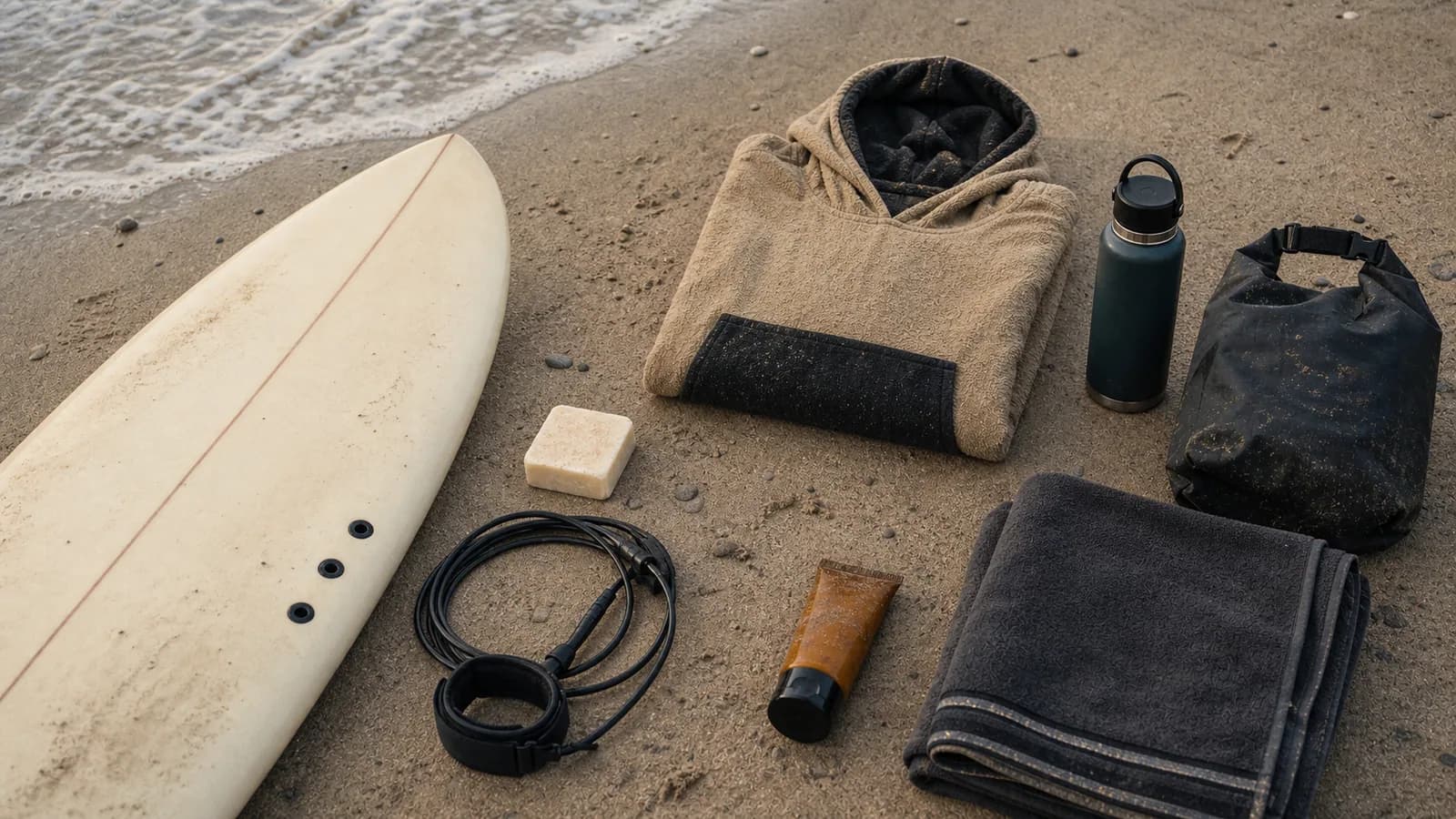
Beginner Surf Gear Checklist Before Your First Session
The essential equipment, comfort items, and behavior checks that make a first surf session safer and less stressful.
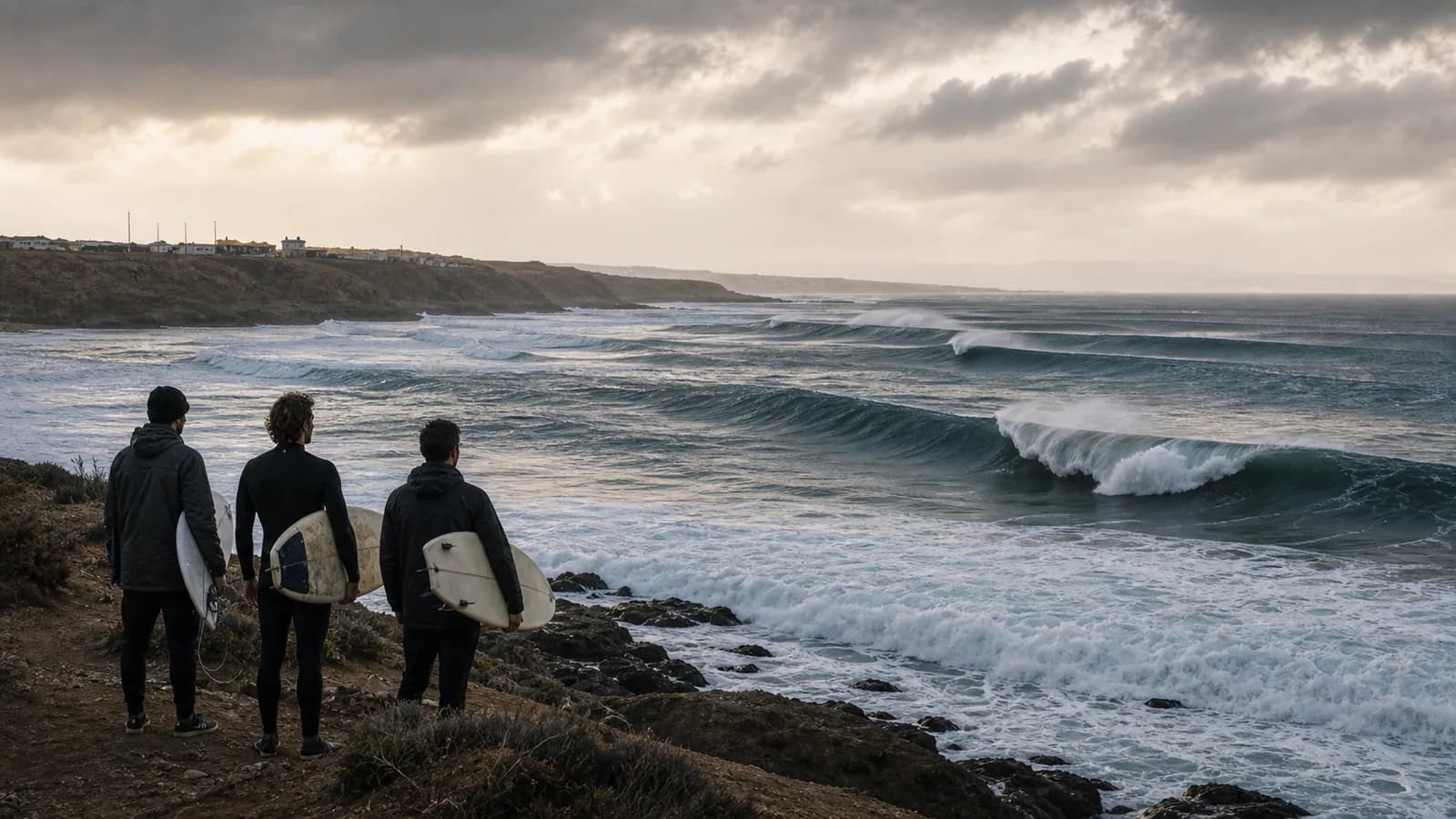
The Best Time of Year to Surf in Morocco
What autumn, winter, spring, and summer usually bring to Morocco's Atlantic coast, and why the daily forecast still decides the session.

Best Surf Spots in Morocco for Beginners
A practical first-trip guide to gentle waves, good timing, local surf schools, and respectful sessions along Morocco's Atlantic coast.