
Surf Poncho vs Towel: Which One Is Better After a Session?
An honest comparison of privacy, warmth, absorbency, packability, drying time, travel, and value after surfing.
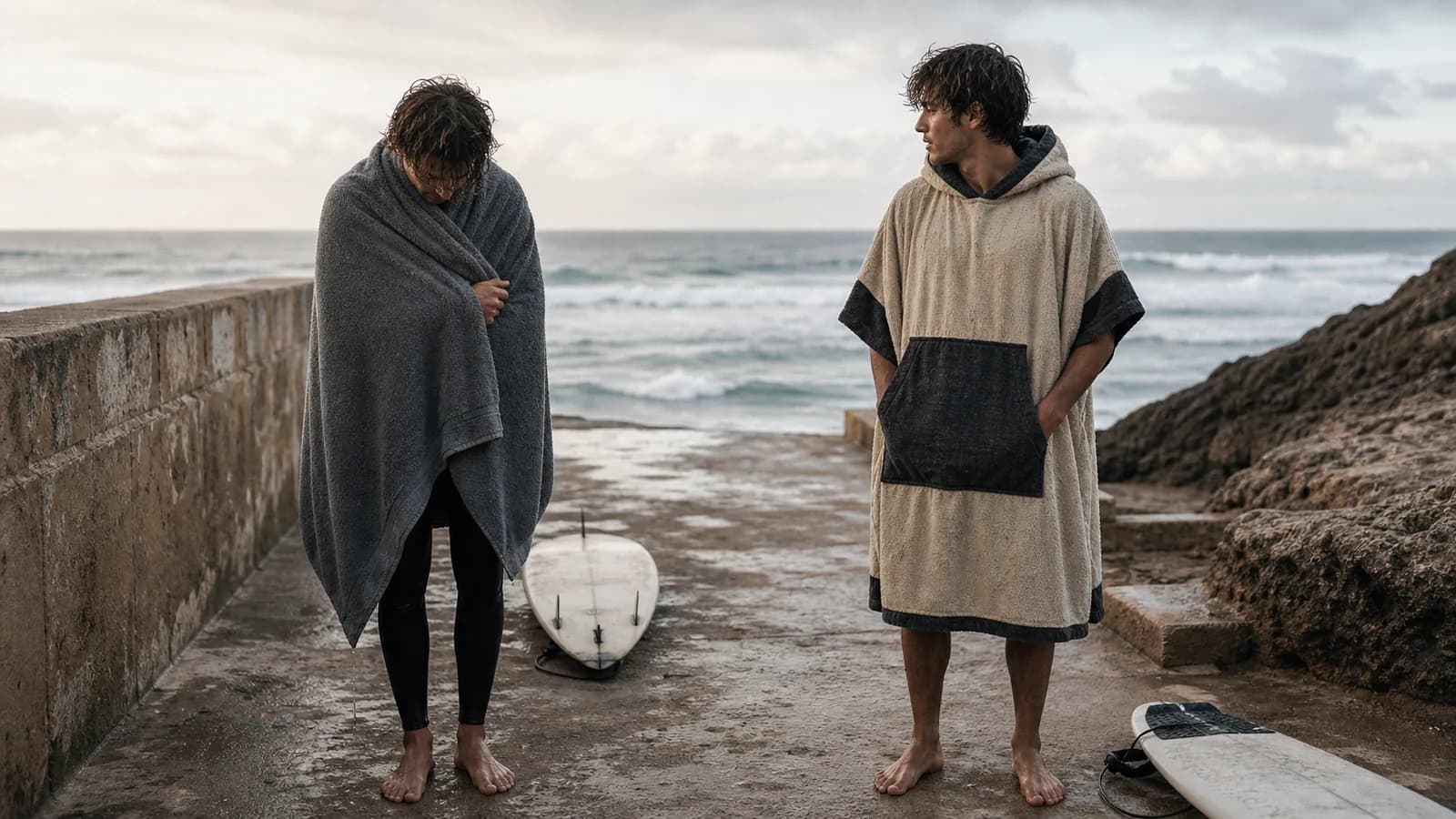
A normal towel can dry you perfectly well after surfing. A surf poncho adds coverage and hands-free changing, but it also takes more space and usually costs more. The better option depends on where you surf, how you travel, how cold you get, and whether you often change in public beach areas. This comparison avoids the idea that one product wins every category. Instead, it looks at the parts of a real post-session routine so you can decide whether a poncho earns its place in your bag or whether a reliable towel remains enough.
Changing and privacy: the poncho wins clearly
Hands-free coverage changes the routine
The central advantage of a changing poncho is that it stays on your body. Wide sleeves and an oversized cut let you pull your arms inside, remove wet clothing, and dress while remaining covered. A towel can provide privacy, but it asks one hand or a careful tuck to keep it closed. That becomes awkward when a wetsuit sticks around the ankles or when wind repeatedly opens the towel.
If you change at a surf club with proper facilities, this advantage matters less. If you change beside a road, parking area, broad public beach, or crowded trip vehicle, the poncho can reduce stress. Fit is important: a short or narrow poncho may not provide enough coverage, while an excessively long one can drag through sand and water.
Warmth and wind: coverage matters
Poncho for transition, dry layers for recovery
Both options absorb water, but a poncho covers the shoulders, torso, and often the upper legs continuously. That reduces the amount of wet skin exposed to wind. A thick terry poncho can feel noticeably warmer on cool Atlantic days, particularly when the car or dry clothing is several minutes away. The hood also helps with wet hair and heat loss around the head.
A towel can still work quickly if you dry immediately and put on warm clothes. In hot weather, a heavy poncho may feel unnecessary. Remember that neither item is a true insulated layer. The goal is to become dry, then add appropriate clothing. Staying in a damp poncho for a long time is not the same as warming up.
Drying your body: fabric matters more than shape
A high-quality cotton towel may absorb as well as or better than a poorly made poncho. Fiber, weave, fabric weight, surface area, and detergent residue all affect performance. Dense cotton terry usually feels absorbent and warm but becomes heavy when wet. Microfiber towels and ponchos pack smaller and dry faster, though some users prefer the feel of cotton.
Do not assume the word surf makes a fabric technically superior. Check material details, reviews, measurements, and care instructions. A poncho with a large hood and pocket has more layered areas that can hold moisture. A flat towel can be spread open easily. Whichever you choose, shake out sand and hang it with maximum airflow after every use.
- Cotton terry: warm, familiar, absorbent, but bulky and slower to dry.
- Microfiber: compact and fast-drying, but often lighter and less plush.
- Blends: designed for balance, with quality varying by construction.
- Any fabric: performs worse when stored damp or coated with softener residue.
Packing and travel: the towel often wins
Count the job it does, not only the liters it occupies
A normal towel is easier to fold into a narrow bag, share across activities, and replace almost anywhere. Lightweight travel towels become extremely compact. A thick poncho occupies more room and can weigh significantly more after use. For flights, motorbike travel, buses, or long walks to the break, that difference matters.
The calculation changes if the poncho replaces several items. Some surfers wear it as the warm layer between the beach and vehicle, use it as a seat cover, and change inside it. If that removes the need for a separate towel and extra cover, the bulk may be justified. Measure your bag and consider the wet return journey, not only how neatly the product arrives folded.
Sand, washing, and drying at home
Your drying space is part of the purchase decision
Towels are simple rectangles, so sand shakes out and the whole surface can be exposed to air. Ponchos have seams, hoods, pockets, and overlapping fabric where sand and moisture can stay hidden. This does not make them difficult to care for, but it makes immediate drying more important. Turn the hood and pocket open and use a broad hanger or line.
Both should be washed according to the label. More detergent is not better, and fabric softener can reduce absorbency in many towel fabrics. If your home has limited drying space, a quick-dry towel may be more practical than a thick cotton poncho. If you surf several days in a row, consider whether the item will be fully dry before the next session.
Cost and value over time
Frequency turns convenience into value
A towel usually costs less, and many people already own one that works. A poncho asks for a larger upfront purchase, particularly when fabric and construction are designed for repeated use. Value depends on frequency. If you surf twice a year and change in facilities, a specialized garment may add little. If you surf every week in windy public areas, easier changing and warmer transitions can justify the cost quickly.
Look for strong seams at the armholes and hood, enough fabric for movement, and a design you will actually carry. Limited-drop products can offer identity and community value, but those benefits should sit on top of function. A product that looks connected to the coast but stays at home is not useful gear.
Which one should you choose?
Match the product to the session you repeat
Choose a towel if you prioritize low cost, small packing size, fast hanging, and flexibility across travel or home use. Choose a surf poncho if public changing, wind, privacy, and hands-free movement are regular parts of your session. Some surfers carry both: a poncho for changing and a small towel for feet, equipment, or a second person. That is convenient but not necessary.
For the Casablanca coast and other breezy Atlantic settings, a poncho often earns its place because the change happens in exposed areas and the temperature can drop quickly after water time. Read the complete Fishing Waves poncho guide for fit and fabric details, then explore the current shop when a limited poncho release is available. The right choice is the one that makes your actual routine calmer, not the one that wins an abstract gear debate.
Common questions
Is a surf poncho warmer than a towel?
Usually, because it continuously covers more of the body and often includes a hood. Warmth still depends on fabric weight, wind, temperature, and how quickly you change into dry clothes.
Do surf ponchos dry quickly?
Microfiber versions often do. Thick cotton versions can take longer than a flat towel, especially around the hood and pocket. Hang the poncho fully open after use.
Can a surf poncho replace a towel?
Yes for many surfers. It can dry the body and provide changing coverage. Some still carry a small towel for feet, gear, or faster cleanup.
Shop the latest coastal drop.
Limited products shaped by Atlantic sessions, shore days, and Casablanca movement.
Shop Fishing WavesJoin the Fishing Waves community.
Eligible owners connect through product passes, member access, community stories, and future coastal projects.
Discover Wave ClubRelated stories
All articles
What to Wear After Surfing: The Complete Poncho Guide
Why changing ponchos work, how to choose fabric and fit, and the simple routine that makes cold post-surf minutes easier.
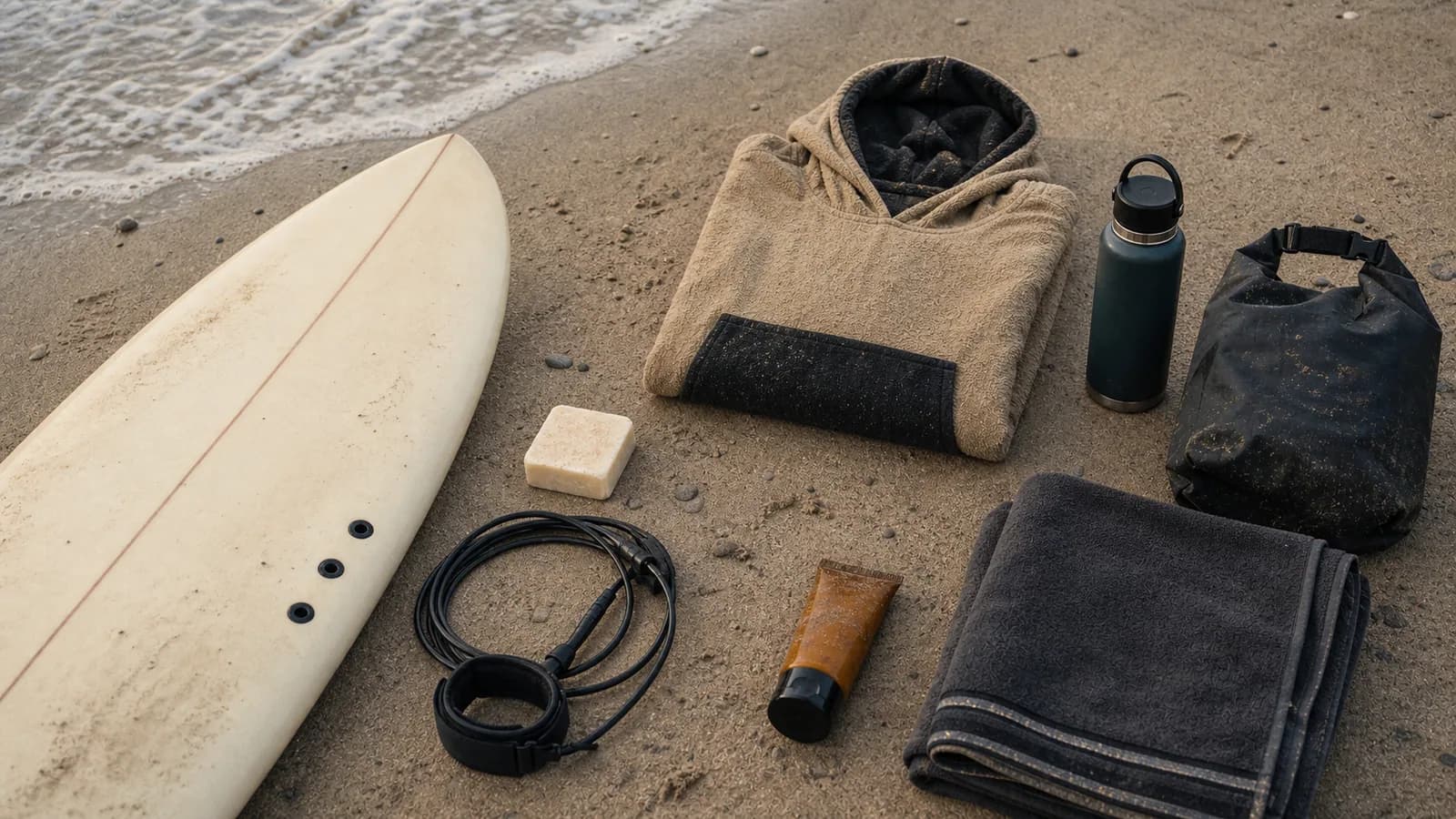
Beginner Surf Gear Checklist Before Your First Session
The essential equipment, comfort items, and behavior checks that make a first surf session safer and less stressful.
How Limited Surf Drops Create a Stronger Community
Why smaller releases, product identity, private access, verified ownership, and thoughtful resale can deepen a coastal brand community.